


The Importance of IPAF Training for Safe and Compliant MEWP Use
Operating Mobile Elevating Work Platforms (MEWPs), including scissor lifts, cherry‑pickers and personnel lifts, bring significant benefits in productivity when working at height is necessary. But MEWPs also pose serious risks in the hands of those who’ve not been trained properly. Afterall, powered access platforms are heavy and powerful. That’s why access platform training such as IPAF training is essential, both for safety and regulatory compliance. Read why in our article.
What is IPAF Training?
IPAF training has been developed by the International Powered Access Federation (IPAF) to ensure industry professionals meet legal training requirements and are able to safely operate access platforms. IPAF training courses are an industry standard and help to reduce accidents and improve safety.
Learn more in our Guide to Access Platform Training.

Why is IPAF Training Vital for Safety and Compliance?
Environments such as construction sites and large-scale electrical installations are dangerous places to work by default. But, when working at height, the risks are increased. And this is evidenced by the fact that falls from height are the biggest cause of fatal accidents in the UK. So, the following lists why IPAF training is so important for making sure people work on MEWPs as safely as possible.
1. Boosts On‑Site Safety and Hazard Awareness
Promoting a safety-first culture will always lead to reducing accidents and safety issues. Of course, there are training by the likes of CITB (Construction Industry Training Board) to keep people safe, but they are not necessarily specific to operating or managing the use of MEWPs. Therefore, IPAF training equips operators and managers to:
Identify hazards like entrapment, overturning, falls, and collisions
Conduct thorough risk assessments and plan safe rescue procedures.
Avoid costly accidents that harm people, productivity and business reputation.
Use access platforms in a safe and efficient way
2. Meets Legal and Insurance Requirements
Under the Work at Height Regulations 2015, UK employers must ensure operators are competent or properly supervised. Without this it leaves employers and employees open, not only to risk of accidents, but legal action too. All of which negatively impacts businesses and individuals.
Some insurance providers require IPAF PAL card certification as proof of proper training in order to protect people and businesses with the necessary cover should the worse happen.
Obtaining a valid PAL card also gives operators a globally recognised credential valid for five years. So for companies with large workforces or subcontractors working across multiple sites all the time, this is quick and easy proof of competence to meet legal and site requirements.
3. Hands-On Practice and Equipment Familiarisation
MEWPs tend to serve a similar function, but they have their differences from controls to emergency lowering. So, courses include classroom or e-learning theory with hands‑on operation, teaching a variety of skills in areas such as pre‑use checks, emergency descent, safe driving procedures, PPE (Personal Protective Equipment) use, and more. One course, IPAF PAL+ trains people for working at height in challenging or high-risk environments.
The familiarisation of equipment ensures a level of confidence and understanding in preparation for the real‑world use. The courses are not limited to operators. For example, MEWPs for Managers and IPAF demonstrator are ideal for people in charge of sites and teams.
4. Masters Emergency Preparedness
All work at height poses some risk. But when using MEWPs unfortunately breakdowns can cause people to get stuck at height. Or medical emergencies can cause someone to fall ill while at height. So, IPAF training covers areas such as entrapment awareness, recovery plans, ground rescue, and safe pedestrian‑controlled movement. The result is a greater understanding of the risks and how to deal with tricky situations.
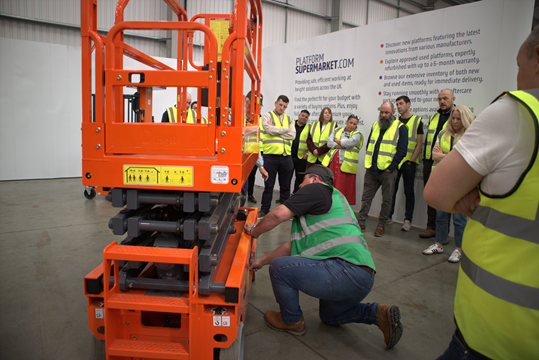
5. Supports a Safety Culture & Ongoing Compliance
IPAF focuses not just on operators, but also on supervisors and managers. There are courses tailored for supervisors and those responsible for MEWP hiring and site operations. Taking such training promotes a culture where safety is embedded at every level and supports compliance with accreditations such as ISO standards.
Summary Table: IPAF Training Benefits For Using MEWPs
| Benefit | Why it Matters |
|---|---|
| Stronger Safety | Increases awareness and helps reduce incidents |
| Compliance | Meets regulations and insurer expectations |
| Complete Skill-Building | Theory, practical, and familiarisation |
| Leadership Engagement | Involves managers and supervisors |
| Emergency Readiness | Prepare plans to help prevent panic in a crisis |
IPAF Training Is Not a Tick Box Exercise or an Inconvenience!
IPAF training is certainly not just a box to tick, it’s a comprehensive framework that empowers MEWP operators and their managers to operate with competence, compliance, and confidence. When integrated into a robust safety programme, it reduces risks for elevated working, with safety very much front and centre.
IPAF Training with Horizon
If you or your team are looking to renew IPAF licences, upskill teams or boost safety when working at height, Horizon has a full IPAF training pathway:
By choosing accredited IPAF training, you’re not only ensuring compliance, but you’re also investing in your team’s ability to work safely, efficiently, and confidently at height.
Contact Horizon Platform’s accredited IPAF trainers today.
